How to Best Treat Oligometastatic Breast Cancer

Oligometastatic breast cancer is breast cancer that’s spread to parts of the body away from the breast, like the bones or liver, but there are only a few small cancer lesions at the metastatic site. Dr. Jennifer Plichta, of Duke University, was the corresponding author of a paper looking at treatments for oligometastatic breast cancer, including surgery to remove the primary tumor in the breast and removing the metastatic lesion with surgery or treating it with radiation. The study found that removing the primary breast tumor was associated with better survival.
Listen to the episode to hear Dr. Plichta explain:
- Sponsor Message
how oligometastatic breast cancer is defined
- Sponsor Message
why it’s difficult to study oligometastatic breast cancer
- Sponsor Message
the results of her study and what they mean for people with oligometastatic disease
Welcome to the Breastcancer.org Podcast, the podcast that brings you the latest information on breast cancer research, treatments, side effects, and survivorship issues through expert interviews, as well as personal stories from people affected by breast cancer. Here’s your host, Breastcancer.org Senior Editor, Jamie DePolo.
Jamie DePolo: Hello. As always, thanks for listening. In oligometastatic breast cancer, the cancer has spread to parts of the body away from the breast, like the bones or liver, but there are only a few small cancer lesions. “Oligos” means “few” in Greek. Not a lot of research has been done on oligometastatic breast cancer, so I'm very happy to be talking to Dr. Jennifer Plichta of Duke University. She is the E. Fulton Brylawski Associate Professor in Women’s Health, as well as associate professor of surgery and population health sciences, and director of the Breast Risk Assessment Clinic in the Duke Cancer Institute.
Dr. Plichta was the corresponding author of a recent paper looking at treatments for single-site breast cancer, meaning the cancer has spread to only one other location. These treatments included removing the primary tumor in the breast and removing the metastatic lesion with surgery or treating it with radiation. The study found that removing the primary breast tumor was associated with improved survival.
Dr. Plichta, welcome to the podcast. I'm very, very interested to talk to you about this research.
Dr. Jennifer Plichta: Thank you so much for having me.
Jamie DePolo: So, my understanding just from what I've read preparing for this podcast, is there really is no universal definition of oligometastatic breast cancer. It seems that some doctors say it’s five or fewer lesions, some say three or fewer. So, how did you define it for this study, just so we know?
Dr. Jennifer Plichta: Yeah. Really great question. And I think that it varies depending on the cancer site. So, today we’re talking about breast cancer, but if you go to other cancers like colon or lung, you might find slightly different definitions. In breast, in particular, just as you stated some studies will quantify or count the number of lesions and say that number is three or five and that’s what they consider oligometastatic. Unfortunately for this study, the data source that we use is one of the largest cancer tumor registries in the United States. It actually is the largest. It’s called the National Cancer Database. And because that database collects data on literally hundreds of thousands of breast cancer patients every year, we can't collect really fine details of every cancer diagnosis, just because there’s too many patients to capture, right?
And so, instead what it captures are certain organs, like the bones, the lungs, the liver, and just says, does that patient have cancer at that site, and it’s simply a yes or no. It actually doesn’t put in there how many cancer spots you have in your lungs or your bones or anywhere else. There’s no number tied to it. All I know is that that patient that’s being described either has cancer in their lungs, or in their bones, or in their liver, or the brain. There’re actually four sites that they ask about.
And so, given the limitations of the data source we were not able to use a number. So, there’s no specific number for this study, meaning no like, five or three. Instead, all I can say is that this patient appeared to only have breast cancer spread to their bones. And if they only had it in their bones, then that was the inclusion criteria for this study. Now, you could argue that you don’t even know how many spots they had in their bones, and you’d be right. That’s exactly right. They could have had 15 spots in their bones.
But I will say that just in general, clinically speaking, somebody that has that much disease in their bones probably also has it somewhere else, right? It’d be pretty rare for somebody to have, like, 50 bone mets or you know cancer in their bones in 50 different spots, but nowhere else. Usually once you start getting into those five and 10 numbers it’s also spread to other parts of the body. So, that’s why we thought that was kind of a reasonable surrogate for that definition. So, again, really not a good definition of oligometastatic, but kind of a reasonable surrogate.
Jamie DePolo: I see. I see. So, is there no specific…or would I say, diagnosis code for oligometastatic? Is that true?
Dr. Jennifer Plichta: Oh, that is a great question because not only is there no diagnosis code specific for oligometastatic, there is no diagnosis code for metastatic breast cancer. Now, how fascinating is that? Can you believe…
Jamie DePolo: Wow.
Dr. Jennifer Plichta: I know. It’s crazy. Exactly. Yes. So fascinating.
The codes that we have is, we have codes for breast cancer, and those codes in my mind are a little bit silly because part of that code includes where in the breast is it. Meaning is it in the upper outer breast or the inner or the lower part of the breast, whatever. Which is kind of an irrelevant piece of information to collect, but we collect it. And we have codes that say you have cancer that has spread to a different body part, meaning somebody might have bone mets, but I don’t know where that cancer came from. It could have come from their lungs or from their colon. All I know is that cancer has spread to their lungs, but I don’t know where from.
So, again, there’s no code for metastatic breast cancer, but instead what you’ll find is that patient has a diagnosis code for their primary breast cancer, meaning breast cancer of the left breast in the upper inner quadrant, estrogen receptor-positive. There’s a code for that. And then there will be a separate code that the patient has metastatic lesions in their bones.
But again, if that person has two cancers, meaning maybe they have both lung and breast cancer, the bone thing, you don’t know which cancer it came from. It could have come from the lung or the breast. And then, fascinating ,since nobody codes the primary, meaning let’s say the doctor is in a hurry and they don’t put in a code for the breast, all they put in in the bone part, then you have no idea where it came from.
So, yeah, it’s a real annoyance for those of us that do research, that there’s no unique code for not only oligometastatic breast cancer, but also just metastatic breast cancer. It just blows my mind.
Jamie DePolo: Wow. Yes. I had no idea. That’s crazy.
Well, that kind of maybe helps answer my next question. Is that there are not very many studies on oligometastatic breast cancer and I'm wondering if that is part of the reason why, because it sounds like it could be a little bit difficult to study if you can't even pull a dataset that you know for sure people had oligometastatic disease.
Dr. Jennifer Plichta: A hundred percent. It is hard to find these patients. So, some of the other research that we’ve done in our group is trying to develop algorithms or ways that you can find these patients in a medical record so that we can just, like, have some understanding of who these patients are, what kind of disease they have, what does their course look like? And to do that you have to be able to find them, right? Like find them, pull them out of the medical record. And that is very difficult and takes a lot of manual chart review. Meaning somebody goes into each patient’s record who has breast cancer and sees, do they have metastatic breast cancer, do they not, how did they do? And that’s very time-consuming because thankfully most people who have breast cancer don’t go on to get metastatic disease or don’t have it from the beginning. And so, that’s a long process.
So, the one thing we’ve tried to do is to develop an automated way of doing it so if you put in certain combinations of features of a patient, like oh they got a PET scan and then started this and never had surgery, or the timing of different things. So, just different things that people may experience in their breast cancer journey and say, okay, if they meet all these criteria, very likely they have metastatic breast cancer.
And it’s okay. Our performance on it is like, you know, correct about 80%of the time, which you know, is better than nothing. So, it’s a start. So, we’re working on it. We’re trying to find ways to identify these patients, but yeah, if you know anybody that can help us just get a diagnosis code that obviously would be the biggest win. So, right now we’re working on alternative ways to find these patients so that we can develop some of these cohorts and kind of really look at them more specifically and see what’s happening.
Jamie DePolo: That kind of leads into my next question. I'm assuming that all of that contributes to the fact that there are no treatment standards, because if you can't find these people, if you can do research on the records to see what is the most effective treatment, you can't develop standards of care.
Dr. Jennifer Plichta: Yeah. It is definitely tricky to develop standards of care when there is so little data. You know, you certainly could try and do some prospective studies, but most of the time these prospective studies have to be broken down into such fine small groups, it would take too long to accrue to kind of a study that would cover everyone. And so, really you would rely on these kind of retrospective studies, meaning studies that look at existing data to try and find out where should we start. Instead of just putting everybody in, meaning all the triple-negatives, all the hormone-sensitive cancers, all the you know whatever, putting them all in we know that there’s some difference there. How do you pick the subgroup? There’s just really not great data to figure out which subgroup should be studied with which different treatment. So, yeah, it’s really a big problem for those of us trying to do that type of research.
Jamie DePolo: Well, let’s talk about your study because it sounds like you're trying to at least chip away at some of this unknownness. How did it come about, and can you give us some of the background on this study?
Dr. Jennifer Plichta: Yeah, absolutely. So, I am a breast surgeon by training and so you might think and might not be wrong, you know, if hammer sees a nail where can I do surgery, right? So, who else can I do surgery on? But I think that this is really an unanswered question. So, you know, there are some studies that came out a few decades ago that looked at offering surgery of the primary tumor to patients with metastatic breast cancer. So, it’s just kind all-comers and some of that data suggested that people who had surgery did better.
So then, there were several prospective, randomized clinical trials that opened up where they took patients and offered surgery to half and didn’t do surgery in the other half. And most of those studies unfortunately showed that patients who had surgery didn’t do any better than people who didn’t have surgery. There was one study that said that people who had surgery probably did better, but the other three or four studies said probably not.
But if you really look carefully at those studies, again, because we don’t know much about metastatic breast cancer it was all-comers. So, it was every type of biomarker. People who had, you know, probably lots of cancer throughout their bodies. Some people who had, like, a solitary bone met. Some people who had brain mets. Some people who had bone and brain. Again, triple-negative, hormone-positives, HER2-positives, everybody thrown in those buckets. And the studies only had a couple hundred patients, so you can imagine by the time you break it down into the subgroups each group might have had 20, 30 patients. I mean, how are we going to make a decision based on 20 patients? That’s really tough. And so, I think that those studies are limited by those really small sample sizes in the subgroups.
So, the overall study was well powered, but we know that breast cancer is not all the same. We use the term breast cancer as if everybody’s got the same breast cancer, but we know they don’t. I'm sure nobody listening to this thinks that. And so, I think that that’s really the pitfall of those studies. So, with this study, the strength of it is that we had thousands of patients, right? Not hundreds. Thousands. And so, we were really able to look at some of those subgroups of patients. So, those who might have more favorable or less favorable biology, again triple-negatives tend to not do so well compared to some of the hormone-positives. And so, we were able to break it down by those. We were able to limit it just to people who again are probably going to do better because they have less disease. So, what we call oligometastatic breast cancer.
In this study it was really more single-site disease. And by doing that, again, really trying to tease out some of those subgroups that might benefit not only from surgery of the primary tumor, so doing surgery of the breast, but also treating that distant disease and really seeing if we’re approaching it with more of a curative intent. Meaning, I'm going to treat all of the known disease with targeted therapy. So, not just systemic therapy, like chemotherapy, but I'm going to remove the cancer of the breast, I'm going to remove the cancer in the liver. You know, can we see some benefits in those patients? Is there any association with doing those types of aggressive therapies with more of a curative intent, but is that beneficial in these kind of subgroups? Which again those other studies, which are great studies, they’re just not powered to look at those smaller subgroups and that’s really the strength of this study, is we really had the numbers on our side to do those subgroup analyses.
Jamie DePolo: And so, could you talk about results? What did you find?
Dr. Jennifer Plichta: Yeah, sure. So, really what we showed that I thought was probably the most interesting finding is that patients who did the best were patients who had breast surgery as a part of their treatment. So, we looked at patients who had no local therapy, meaning didn’t have any breast surgery and had no treatment of those distant sites, like the lungs, liver, bones, etc. We looked at patients who only had surgery of the breast. We looked at patients who only had treatment of those distant sites, like their bone mets. And then, we looked at the course of patients who had both. So, we removed the tumor in the breast, and we took out their liver met or whatever we did to the other site. And the patients who did the best included those who had breast surgery.
So, if you had no therapy, you actually did the worst, meaning you didn’t have breast surgery and you didn’t have any treatment of the distant site. But for patients who had both surgery and treatment of the distant site or just treatment at the distant site, they didn’t do as well. So, really it seems like removing that breast primary was the big part of why perhaps some of these patients did better because that’s where we saw the best association.
And you could say that well, maybe patients where we didn’t remove the breast primary and they only had treatment at the distant site, maybe that was palliative, which makes sense, right? I mean, if somebody had maybe just some radiation to a bone met maybe that bone met was painful. And so, you know, the goal there wasn’t curative, it was to help them feel better because that metastatic spot in their bone was causing them pain in their hip, or their leg, or wherever. And so, sometimes we’ll radiate that to help improve that pain.
But in that population, those actually did just as bad as those who had no therapy. But really those who had breast surgery as a part of it. So, again, it maybe indicates more of a curative intent. Those are the patients that really did the best. And we saw that really across most of disease sites that were involved. So, in patients who only had bone involvement, that was true. Patients who only had lung or liver involvement, that was true. So, it was pretty consistent no matter where your disease had spread that if they incorporated breast surgery as a part of their treatment, those patients looked like they had better survival.
Jamie DePolo: Okay. And I just want to clarify for anybody who’s listening, when we’re talking about treatment versus no treatment, we’re talking about local treatment. Correct? It wasn’t that people didn’t get anything like hormonal therapy or chemotherapy or targeted therapy?
Dr. Jennifer Plichta: Absolutely. And actually, as a part of this study, we only included patients who had some type of systemic therapy. So, to your point, they had to have some kind of either chemotherapy, endocrine therapy, or you know, like the aromatase inhibitors, or tamoxifen type of stuff, or some kind of targeted or immunotherapy. So, you had to have some systemic therapy because really in today’s day and age we know that that is the backbone of treating metastatic breast cancer, right? You have to get systemic therapy for your systemic disease. If your disease is in multiple places in your body, you have to get therapy that goes to all of those places. You can't just limit it to one place or another. So, that was also a requirement or an inclusion criteria for this study, that patients had to receive some type of systemic therapy and then if in addition to that they had these other therapies, that’s really what we were looking at those subgroups on.
Jamie DePolo: Okay. And I'm just a little bit curious. The people in this study, they had the metastases in four spots, as you mentioned, the brain, the bone, the liver, and the lungs. And in certain places removing that spot people did better. Do you think that these results could apply to people who had mets in less common areas? I'm thinking like the stomach or spinal cord fluid, or is that…do you have to do that research to figure that out?
Dr. Jennifer Plichta: Yeah. I think we’d really have to look at those groups on their own to figure that out. I think that it’s pretty rare for someone to have that as their only site. People absolutely have disease that involves those places, but it’s less common for that to be the only spot. And so, again, I think that once you start getting there, those patients are less likely to have oligometastatic breast cancer. Meaning, you know, having only three spots or five or fewer, you know? I think that those spots are less common and so we don’t typically see those until some of the more common spots are involved.
Jamie DePolo: Okay. Okay. That makes sense.
So, could you put these results in context for us? I think in the paper it says that fewer than 25% of people had surgery to remove the primary breast tumor and fewer than 20% had surgery or radiation to remove the metastatic lesion. I'm just wondering, are there certain features of the oligometastatic disease that would make surgery more beneficial for some people? Or if somebody has oligometastatic disease is this something they should talk to their doctor about the possibility of doing? How does this fit into our current treatment landscape?
Dr. Jennifer Plichta: Yeah. I think that gets a little tricky because you know this is a retrospective study, meaning we looked at patients who had already gone through things and already done it and we didn’t collect it in a prospective, meaning at time of diagnosis, to see how they are going forward. So, when we think about the results from this study, we have to think about how this study was developed. So, this was really like I said a retrospective study, meaning we took existing data on patients from this tumor registry as opposed to prospective data where we started collecting data from people at the time of their diagnosis. And when you do that, it’s really hard to determine cause and effect.
So, we can't really say that surgery caused these people to live longer, but what we can say is that there seems to be an association there. So, we saw that people who had surgery looked like they did better. Now, why did they do better? Maybe because of surgery, maybe not, hard to say. So, this study is really meant to serve as a foundation to help other people design clinical trials around these questions. And in fact, there’s a study that’s hopefully going to be opening soon that’s doing this exact thing in patients with HER2-positive disease where they're looking at women with HER2-positive oligometastatic breast cancer, and the goal is curative intent. So, it’s going to be doing this.
It’s going to be offering them surgery of the primary and offering them treatment of the distant mets in some cases, and seeing if these are patients that we can offer a cure to. Because our therapies, particularly for HER2-positive disease have become so good. And so, we think that’s a really interesting place to start. So, again, this study is really meant more to serve as a foundation for those better studies, but now those studies can be more focused because of studies like this one.
Jamie DePolo: Okay. And then, kind of following up on that, it sounds like you might have already answered it but I’ll ask the question anyway. Do you think that the results from this study can help start build a foundation of some standards of care? So, you know, going forward, like, okay we did this, let’s move forward now.
Dr. Jennifer Plichta: Yeah. I think so too. I think it can. Again, I think we still need a lot more data on this because we’re going to have to do the work in some of these different subgroups that we just haven’t been able to do in the past, but I think it is definitely a place to leave the door open, right? So, I don’t think…some people keep trying to close the door on doing these types of therapies and I just don’t think we’re there yet. I just don’t think the studies that we’ve done, while good, were able to look at enough of these subgroups to know that the door should be closed for everyone. Do I think everyone should have surgery? No. I definitely don’t. But do I think that there’s some population that probably benefits from surgery? Yeah. I do. And I think that we just haven’t been able to pinpoint that subgroup yet and I'm hoping that this study will help serve as a foundation for those patients and those future studies so that we can identify who really needs that more personalized approach. It’s not a, no surgery for anyone approach. It’s a some people will benefit, some people won't, and we just need to figure out who that is.
Jamie DePolo: Thank you, Dr. Plichta. This has been so informative, so helpful, and I hope to talk to you again in the future when we have results from your upcoming study. So, thank you very much for your time.
Dr. Jennifer Plichta: Thanks again for having me.
Thank you for listening to The Breastcancer.org Podcast. Please subscribe on Apple Podcasts, Google Podcasts on Android, Spotify, or wherever you listen to podcasts. To share your thoughts about this or any episode, email us at podcast@breastcancer.org or leave feedback on the podcast episode landing page on our website. And remember, you can find out a lot more information about breast cancer at Breastcancer.org and you can connect with thousands of people affected by breast cancer by joining our online community.
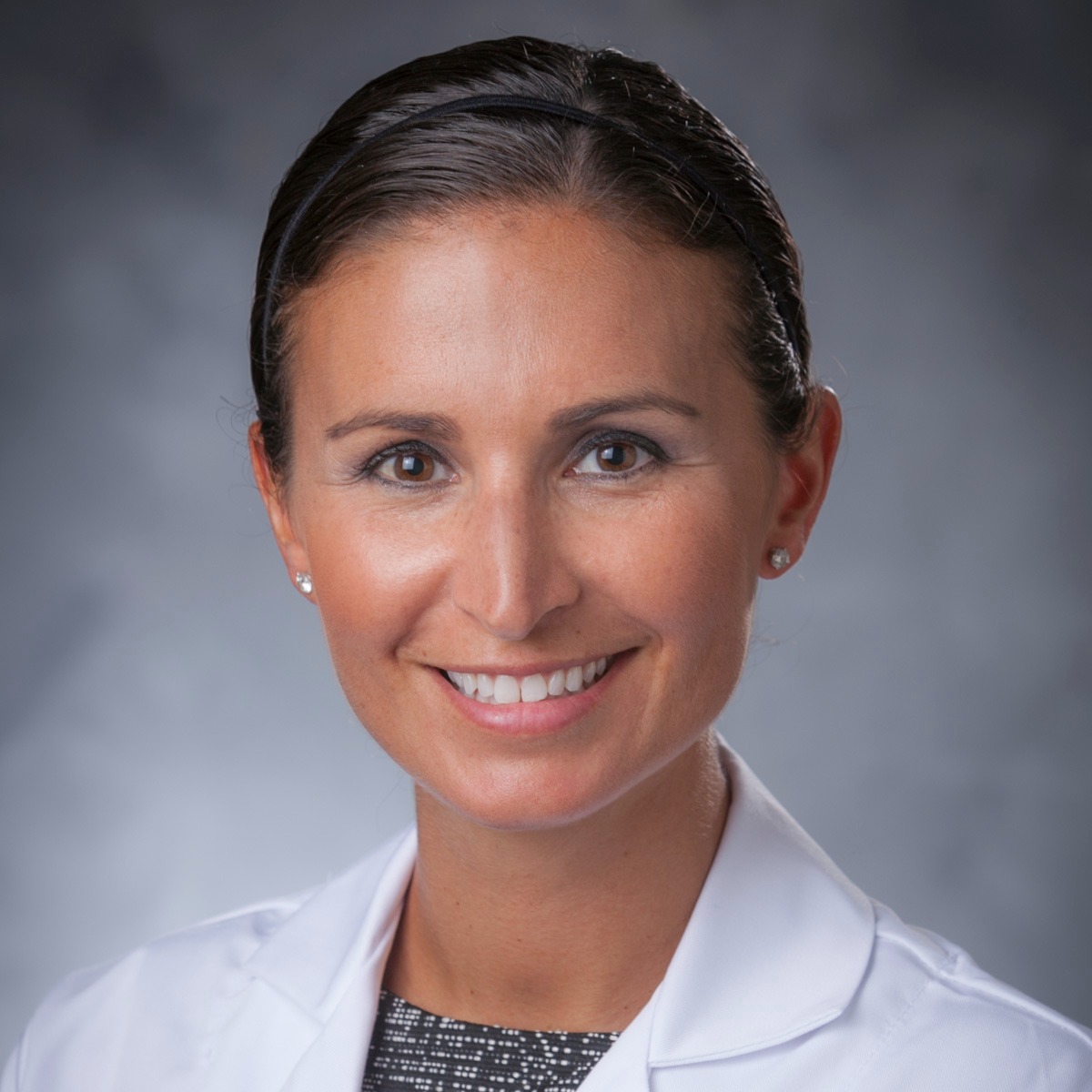
Jennifer Plichta, MD, MS, is a board-certified surgical oncologist who holds the E. Fulton Brylawski Associate Professor in Women’s Health at Duke University, where she is also associate professor of surgery and population health sciences, and director of the Breast Risk Assessment Clinic in the Duke Cancer Institute.
Your donation goes directly to what you read, hear, and see on Breastcancer.org.